
BY Metropolis Corp
RAY BAUM’s Act is a US federal law that requires 911 calls from business and enterprise phone systems to include a “dispatchable location” so first responders can find the caller quickly and precisely. It applies to all multi-line telephone systems (MLTS), including on-premises PBXs, cloud VoIP, and remote softphones.
RAY BAUM’s Act stands for “Repack Airwaves Yielding Better Access for Users of Modern Services Act of 2018”. While it is a broad telecommunications law, Section 506 is the critical component for 911 and enterprise telephony compliance.
Ensure 911 can receive a dispatchable location: a validated street address plus details like floor, room, suite, or similar info.
Apply this requirement across modern platforms, including interconnected VoIP, softphones, and remote worker devices.
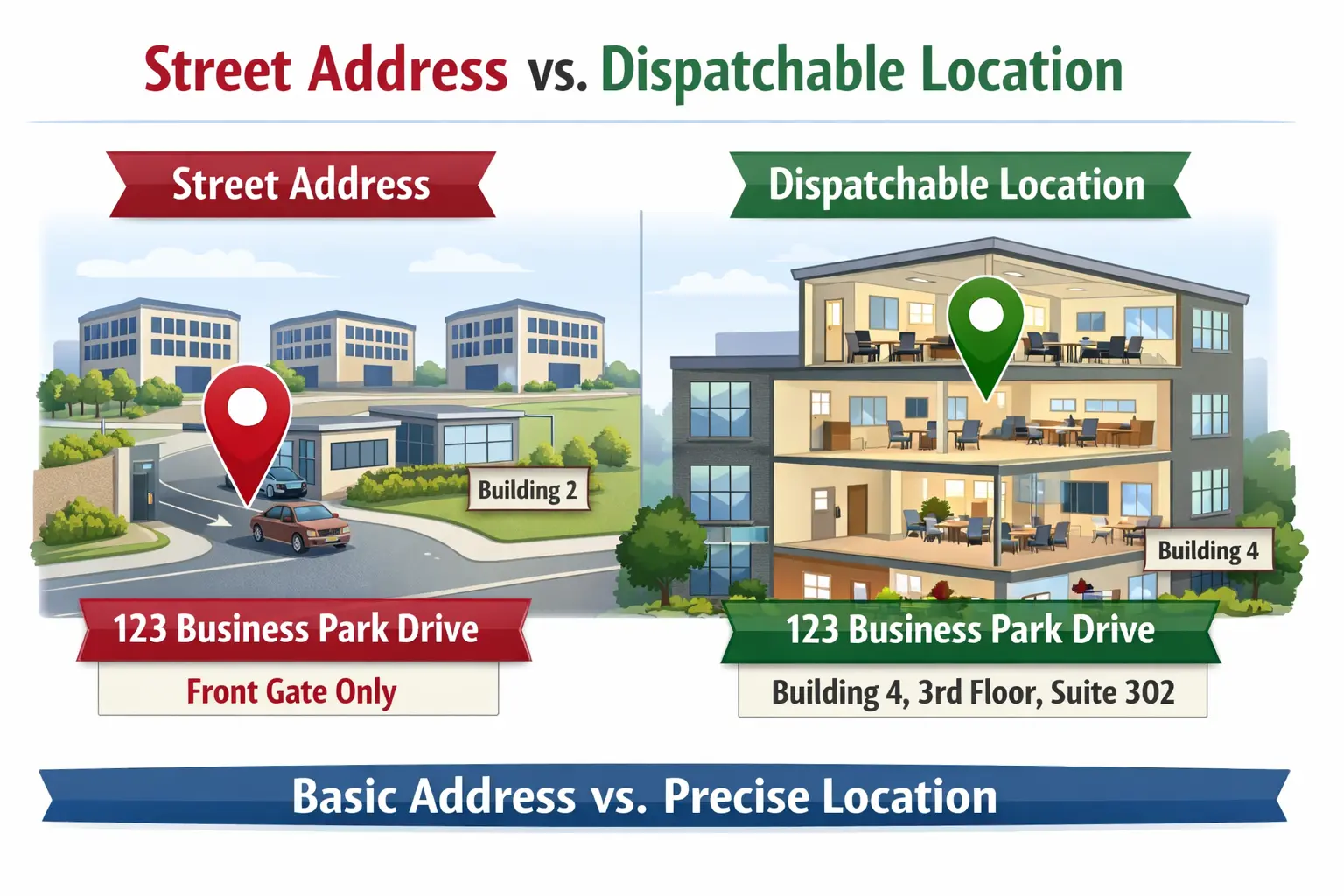
“Dispatchable location” is the core concept of RAY BAUM’s Act for telecom and IT admins. According to the FCC, it is a location delivered to the PSAP that includes the validated street address plus additional location details.
| Input Type | Example Detail | Compliance Status |
|---|---|---|
| Street Address Only | "123 Main St" | Insufficient for multi-story buildings. |
| Dispatchable Location | "123 Main St, Bldg B, 4th Floor, Room 412" | Meets Requirement. |
This level of detail lets first responders find the actual caller inside a multi-story office, hospital, school, or hotel instead of just the front lobby.
If your organization owns or uses an enterprise multi‑line telephone system, RAY BAUM’s Act applies to you. Typical impacted environments include:
Corporate offices and campuses using PBXs or UC platforms.
Hotels, resorts, and hospitality properties with in‑room and lobby phones.
Hospitals, schools, universities, and manufacturing facilities with many endpoints.
Businesses using hosted/UCaaS or cloud VoIP systems, including softphones.
Rule of Thumb: If a device on your network can be used to “order a pizza,” then if it dials 911, it must automatically send location information to the PSAP.
At a high level, organizations must:
Provide dispatchable location with 911 calls from fixed on‑premises devices (desk phones, room phones).
Provide dispatchable location (or acceptable alternative) for non‑fixed devices (softphones, remote users).
Send a callback number with the 911 call so PSAPs can reach the caller if the call drops.
Together, these laws ensure a comprehensive safety net for 911 callers:
| Regulation | Primary Focus |
|---|---|
| Kari’s Law | Direct 911 dialing (no prefix) and on-site notification. |
| RAY BAUM’s Act | Precise location (where the caller is). |
The law drives both technical and operational changes to your voice environment. Typical actions include:
Audit your MLTS: Identify all fixed and non-fixed devices and document current call routing.
Implement an E911 solution: Use a platform that can map extensions, MAC addresses, and IP subnets to specific locations.
Maintain a location database: Define granular locations (building, floor, wing) and establish update processes.
Test and validate: Confirm calls show the correct dispatchable location using approved test procedures.
Does this apply if I’m using a hosted or cloud phone system?
Yes. If you use a hosted MLTS/UCaaS solution, you and your provider still must ensure 911 calls deliver dispatchable location.
Do softphones and remote workers count?
Yes. Non‑fixed and nomadic devices are explicitly covered; you must provide a method to supply up‑to‑date location when those endpoints call 911.
Is a single street address enough for my entire building?
For most multi‑tenant and multi‑floor environments, no. The law requires floor/room/area information so first responders can find callers without searching.
What happens if we’re not compliant?
Non‑compliance creates both regulatory risk and liability risk in the event of an incident.


